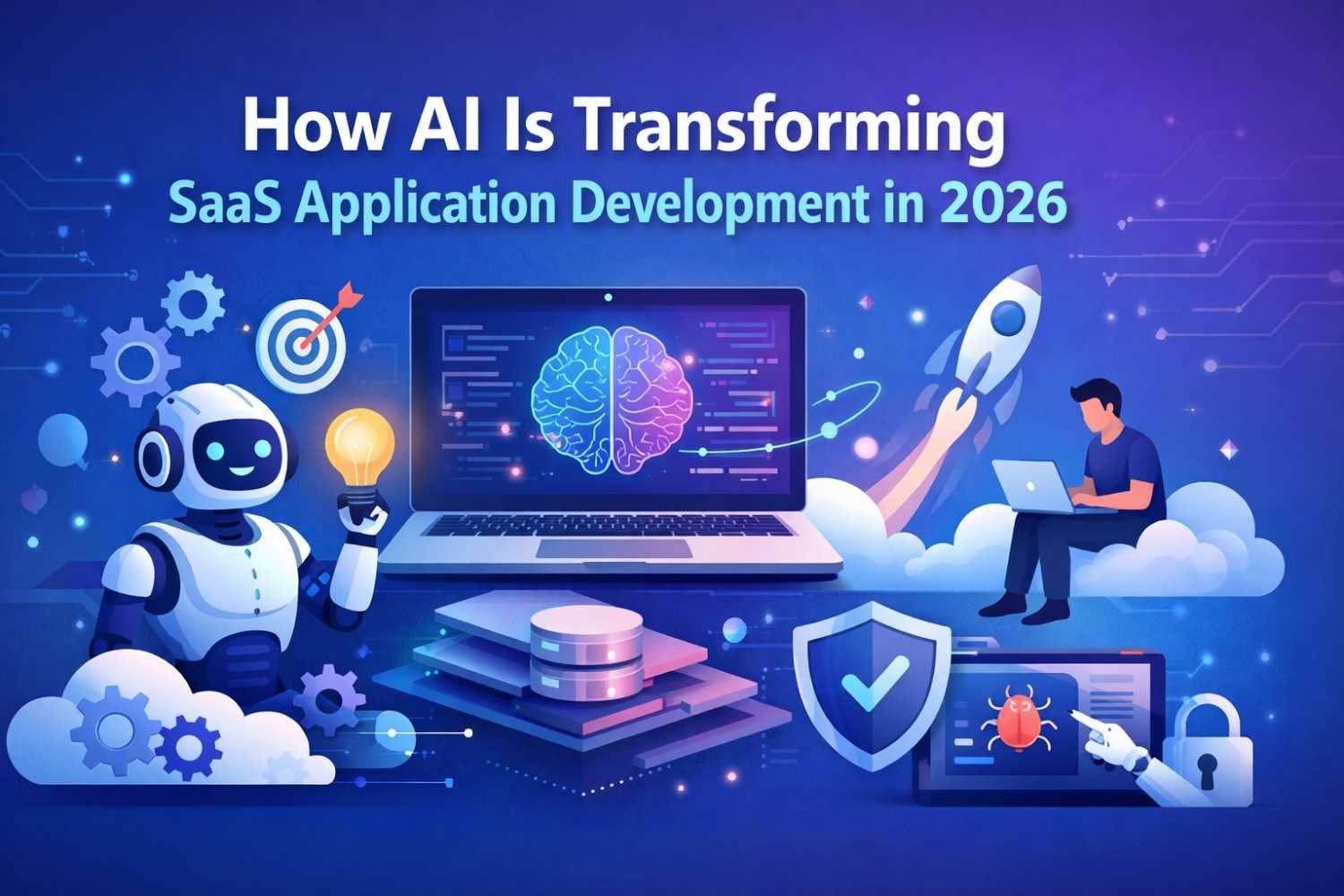
How AI Is Transforming SaaS Application Development in 2026
Introduction
Building a SaaS product felt like assembling IKE A furniture without the manual confusing, slow, and guaranteed to leave you with extra screws. Fast forward to 2026, and artificial intelligence has quietly kicked down the door, reorganized the workshop, and labeled every drawer. AI isn’t just “helping” SaaS development anymore—it’s reshaping how applications are imagined, built, tested, and improved. And while this transformation isn’t magic (despite what some sales decks imply), it is undeniably changing the rules of the game.
The Evolution of SaaS Development (Pre-AI vs AI-Driven)
Traditional SaaS development was reactive by nature. Teams gathered requirements, made educated guesses, shipped features, then waited—sometimes nervously—for user feedback. AI flips that model on its head. Instead of guessing, systems now predict. Instead of reacting, teams anticipate. A modern SaaS App Development Company no longer relies solely on human intuition but blends it with machine intelligence to make smarter early decisions. This shift doesn’t erase human creativity; it amplifies it. And once you’ve experienced development with predictive insights baked in, going back feels… painfully inefficient.
AI-Powered Product Ideation & Requirement Analysis
Product ideation used to start with whiteboards, sticky notes, and one very loud opinion in the room. AI now brings data to the conversation—lots of it. By analyzing user behavior, market trends, and competitor features, AI helps teams identify what users actually need (not just what they say they want). I’ve personally watched product debates end faster once the data spoke up—turns out algorithms don’t care about office politics. This early clarity reduces rework later and creates a calmer, more confident foundation for development. Calm is underrated in software teams.
AI in SaaS Application Architecture & Design
Architecture decisions once depended heavily on past experience and educated guesses. In 2026, AI models analyze performance requirements, user load forecasts, and infrastructure costs before recommending optimal architectures. The same applies to UI and UX design, where AI tailors interfaces based on user behavior patterns rather than design trends of the month. What’s fascinating (and slightly humbling) is how often AI confirms what good designers already suspected—just faster. The result is SaaS platforms that feel intuitive, scale gracefully, and don’t require a tutorial video longer than the actual product demo.
Accelerating Development with AI Coding Assistants
AI coding assistants have matured from “occasionally helpful” to “surprisingly reliable.” They now generate boilerplate code, flag security issues, and suggest optimizations in real time. Developers aren’t replaced; they’re relieved. The mental overhead of repetitive tasks disappears, leaving more room for problem-solving and creativity. A forward-thinking SaaS App Development Company uses these tools to shorten release cycles without sacrificing quality. And yes, developers still review everything—because trusting AI blindly is how you end up debugging at 2 a.m. (Ask me how I know.)
AI-Driven Testing, QA, and Debugging
Testing used to be the phase everyone respected but secretly rushed. AI has made it faster, deeper, and far less painful. Automated test generation adapts as the application evolves, while predictive models identify where bugs are most likely to appear. Instead of hunting for errors, teams are warned before issues escalate. Debugging becomes more surgical, less frantic. The unexpected benefit? Better morale. When quality assurance feels proactive rather than punitive, teams collaborate more openly. Fewer fire drills, fewer blame games, and far fewer “It worked on my machine” conversations.
Smarter Deployment & DevOps Automation
Deployment pipelines in 2026 are no longer static scripts—they’re intelligent systems. AI optimizes CI/CD workflows by predicting failures, allocating resources dynamically, and even rolling back releases before users notice a problem. DevOps teams spend less time babysitting servers and more time improving resilience. From a business standpoint, this means reduced downtime and predictable costs. From a human standpoint, it means fewer late-night alerts. And honestly, anything that lets engineers sleep through the night deserves recognition as a technological breakthrough.
AI-Enhanced SaaS Security & Compliance
Security has always been a moving target, and AI finally makes it feel less like a guessing game. Machine learning models monitor user behavior, detect anomalies, and respond to threats in real time. Compliance tasks—once manual and tedious—are now automated and continuously updated. A modern SaaS App Development Company treats security as an evolving system, not a one-time checklist. The irony is that the more advanced security becomes, the less visible it is. That’s a good thing. Quiet security usually means it’s working exactly as intended.
AI in Post-Launch Optimization & Customer Experience
Launching a SaaS product is no longer the finish line—it’s the starting signal. AI tracks engagement, predicts churn, and personalizes user experiences long after release. Support chatbots resolve issues before frustration sets in, while analytics models recommend improvements based on real usage data. I’ve noticed users don’t praise “AI features” directly; they praise how effortless the product feels. That’s the point. When optimization happens continuously and quietly, customers simply feel understood. And in SaaS, feeling understood is often the difference between retention and abandonment.
Ethical AI & Responsible SaaS Development
With great automation comes great responsibility (yes, I went there). Ethical AI practices are no longer optional in SaaS development. Teams must address bias, ensure transparency, and maintain human oversight. The goal isn’t to remove humans from decisions—it’s to keep them accountable. Responsible development in 2026 means asking not just “Can we automate this?” but “Should we?” That question, asked early and often, builds trust with users. And trust, unlike features, can’t be patched in later.
The Future of SaaS Development Beyond 2026
Beyond 2026, SaaS development will feel less like programming and more like collaboration between humans and intelligent systems. AI will handle complexity, while humans focus on strategy, empathy, and creativity. The most successful products won’t be the most technically impressive—they’ll be the most thoughtfully designed. If there’s a recurring lesson here, it’s this: technology evolves fast, but good judgment still matters. The tools will change again (they always do), but the need for clear thinking won’t.
Conclusion
AI hasn’t replaced SaaS developers—it’s given them better tools, clearer signals, and fewer unnecessary headaches. In 2026, SaaS development is faster, smarter, and more human than it’s ever been (which sounds ironic until you see it in action). We started with guesswork and ended with insight. And while the future will bring new challenges, one thing feels certain: building SaaS no longer has to feel like assembling furniture without instructions. The screws finally make sense.
FAQs
1. How is AI transforming SaaS application development in 2026?
AI improves every stage—from ideation and coding to testing, security, and optimization—by using predictive insights and automation.
2. Does AI replace SaaS developers?
No. AI enhances developer productivity, allowing humans to focus on creativity, strategy, and problem-solving.
3. Is AI-driven SaaS more secure?
Yes. AI enables real-time threat detection, anomaly monitoring, and automated compliance management.
4. Can small SaaS companies benefit from AI?
Absolutely. AI tools are increasingly accessible and scalable for teams of all sizes.
5. What should businesses prioritize when adopting AI in SaaS?
Ethical use, transparency, data quality, and maintaining human oversight.
About The Author