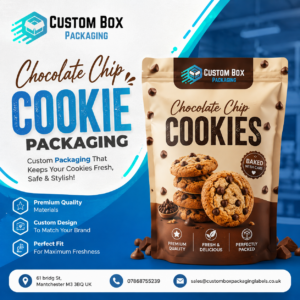
Creating Chocolate Chip Cookie Packaging That Sells the UK
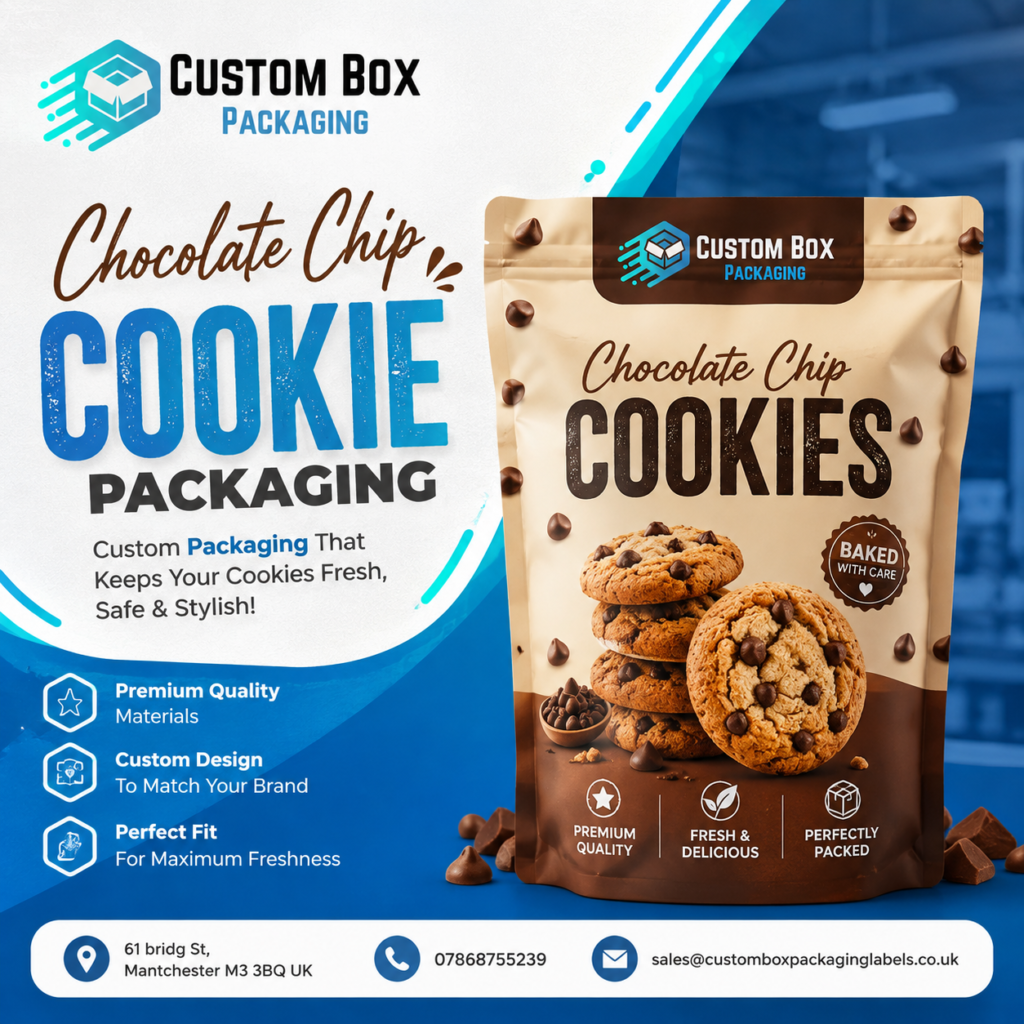
A warm, freshly baked chocolate chip cookie has an immediate emotional appeal. The golden edges, soft centre, and rich chocolate pieces create a sense of comfort before the first bite. For bakeries, cafés, online food businesses, and independent retailers across the UK, effective packaging should capture that feeling while keeping the product safe, recognisable, and ready for purchase.
This is where thoughtful chocolate chip cookie packaging makes a difference. Packaging is not simply a container; it is a silent introduction to the brand. It tells shoppers whether the product feels homemade, premium, playful, sustainable, gift-worthy, or suitable for everyday indulgence. With the right design, chocolate cookies packaging can help a small bakery compete on a crowded shelf, marketplace, or social media feed.
Custom Box Packaging Labels helps UK businesses create packaging and labels that combine presentation, protection, and practical product information.
Why Packaging Matters for Chocolate Cookies
Cookies are delicate products. They can break during transport, lose their texture, absorb surrounding odours, or appear less appealing when packed in a box that is too large or poorly fitted. Well-designed packaging helps reduce these risks while giving the product a polished appearance.
For small businesses, packaging also provides valuable branding space. A logo, colour palette, product name, and carefully chosen message can help customers remember a business after the cookie has been eaten. This matters especially for online orders, farmers’ markets, wedding favours, corporate gifts, and independent food shops.
The best chocolate chip cookies packaged for retail or delivery should offer three things:
- Strong product protection during handling and transport.
- A clear and attractive presentation for the customer.
- Enough space for branding and required food information.
A compact box with a secure closure can make a product feel more considered than a loose bag or generic container. A viewing window may allow customers to see the cookie before buying, while a printed sleeve or branded label can add personality without requiring a fully printed box.
Choosing the Right Chocolate Chip Cookie Packaging
The right format depends on the cookie size, quantity, sales channel, and brand position. A bakery selling one large cookie may need a small folding carton or single-cookie box. A gift brand offering six or twelve cookies may benefit from a stronger presentation box with internal spacing.
Popular options include:
- Small custom cartons for individual cookies or pairs.
- Window boxes that display the product while limiting handling.
- Kraft-style boxes for an artisan or eco-conscious appearance.
- Slide-out boxes for premium gift collections.
- Branded sleeves placed over plain food-safe cartons.
- Stickers and labels for flexible seasonal or small-batch production.
Packaging should fit the product closely enough to prevent unnecessary movement, but it should not compress the cookie. If the box is too large, the contents may shift in transit. If it is too small, the cookie can rub against the sides or become damaged when the package is closed.
For UK businesses selling through post, packaging needs additional consideration. A visually attractive box may not be enough if it cannot withstand sorting, stacking, and movement during delivery. A sturdy outer mailer, protective insert, or suitable cushioning may be needed for larger orders.
Design Ideas That Attract UK Customers
Chocolate chip cookies are familiar, so packaging design should make the product feel distinctive. A traditional bakery may choose warm cream, brown, and muted red tones to communicate comfort and heritage. A modern dessert brand might use bold typography, contrasting colours, or playful illustrations.
A useful design should answer the customer’s main questions quickly:
- What is the product?
- Who made it?
- Why is it special?
- How many cookies are included?
- Is it suitable as a gift?
- How should it be stored?
Front-panel messaging should remain simple. Phrases such as “Double Chocolate Chip,” “Hand-Baked in Small Batches,” or “Soft-Centred Chocolate Cookies” can communicate the product’s appeal without overcrowding the design.
For premium chocolate cookies packaging, tactile details can add value. Matte finishes, textured card, foil accents, and carefully selected labels may create a more luxurious impression. For an independent bakery, a handwritten-style label or batch number can reinforce the feeling of a personal, small-batch product.
Seasonal packaging is another effective approach. Limited-edition labels for Christmas, Valentine’s Day, Mother’s Day, or corporate gifting can encourage repeat purchases while allowing a business to refresh its presentation without changing the entire box structure.
Labels, Information, and Trust
Packaging must look attractive, but it also needs to communicate accurate information. For pre-packed food sold in the UK, labels generally need to provide details such as the food name, ingredients, allergens, net quantity, durability date, storage information where relevant, and the responsible food business’s name and address. Information should be clear, visible, easy to read, and not misleading.gov+1
Allergen presentation deserves particular care. Ingredients containing allergens must be clearly emphasised within the ingredients list, helping customers identify relevant information quickly. A label should never treat required information as an afterthought; the design needs to leave sufficient space for it from the beginning.
Custom Box Packaging Labels can help businesses organise this information within a professional layout. A front label might focus on the product name and visual appeal, while a back or side label can present ingredients, storage instructions, barcode details, and business information in a clean format.
For businesses packaging food themselves, materials should be suitable for food contact. UK guidance states that suitable packaging should be marked as intended for food contact or display the relevant glass-and-fork symbol. This is an important consideration when choosing boxes, inner wraps, liners, adhesives, and labels.
Sustainability Without Greenwashing
Many UK customers want packaging that creates less waste, but sustainability claims need to be practical and accurate. A recyclable box is more useful when the customer understands how to dispose of it. Research into UK consumer attitudes has found that people value recyclability, biodegradability, renewable materials, reduced excess packaging, and clear disposal guidance, while confusion about recycling remains common.
A responsible packaging strategy may include:
- Right-sized boxes that avoid unnecessary material.
- Recyclable paperboard where appropriate.
- Minimal plastic components.
- Simple disposal instructions.
- Water-based or lower-impact printing options where available.
- Packaging designs that can be reused for storage or gifting.
Businesses should avoid vague claims such as “100% eco-friendly” unless they can support them. More specific wording is clearer: “Paperboard box—check local recycling guidance” is generally more useful than a broad environmental slogan.
Sustainable chocolate chip cookie packaging should also protect the product effectively. If cookies arrive broken or stale, customers may view the packaging as unsuccessful regardless of its material credentials. The most suitable solution balances product protection, appearance, food safety, cost, and end-of-life disposal.
Making Packaging Work Online and Locally
Packaging is increasingly part of the customer experience beyond the physical shop. A branded cookie box may appear in unboxing videos, delivery photographs, social media posts, and online reviews. A distinctive design can therefore extend the reach of a small UK food business without additional advertising space.
For local search visibility, businesses can reinforce their location naturally in product descriptions and packaging-related content. References to handmade cookies in Manchester, gift boxes for London customers, or bakery packaging for businesses across Birmingham can help clarify geographic relevance without forcing keywords into every sentence.
This approach supports answer-focused content too. Customers often search questions such as “What is the best packaging for homemade cookies?” or “How do I package chocolate chip cookies for delivery?” Clear website copy, helpful FAQs, and descriptive product pages can answer those questions while presenting the brand as a practical specialist.
A Packaging Partner for Growing Cookie Brands
Whether a business is launching its first cookie range or refreshing an established product line, packaging should be planned as part of the brand—not added at the final stage. The box shape, label layout, materials, colours, and messaging all influence how customers judge the product before opening it.
Custom Box Packaging Labels provides a flexible route for businesses that need professional chocolate chip cookie packaging, chocolate cookies packaging, and branded solutions for chocolate chip cookies packaged for retail, gifting, or delivery. With a considered design, even a simple cookie can arrive looking memorable, protected, and ready to share.
In the UK’s competitive bakery market, the right package can turn a familiar treat into a recognisable brand experience. When the design protects freshness, communicates trust, supports responsible disposal, and reflects the character of the business, every box has the potential to create a stronger connection with the customer.
About The Author