How Does BIS Certification Work for Electrical Appliances?
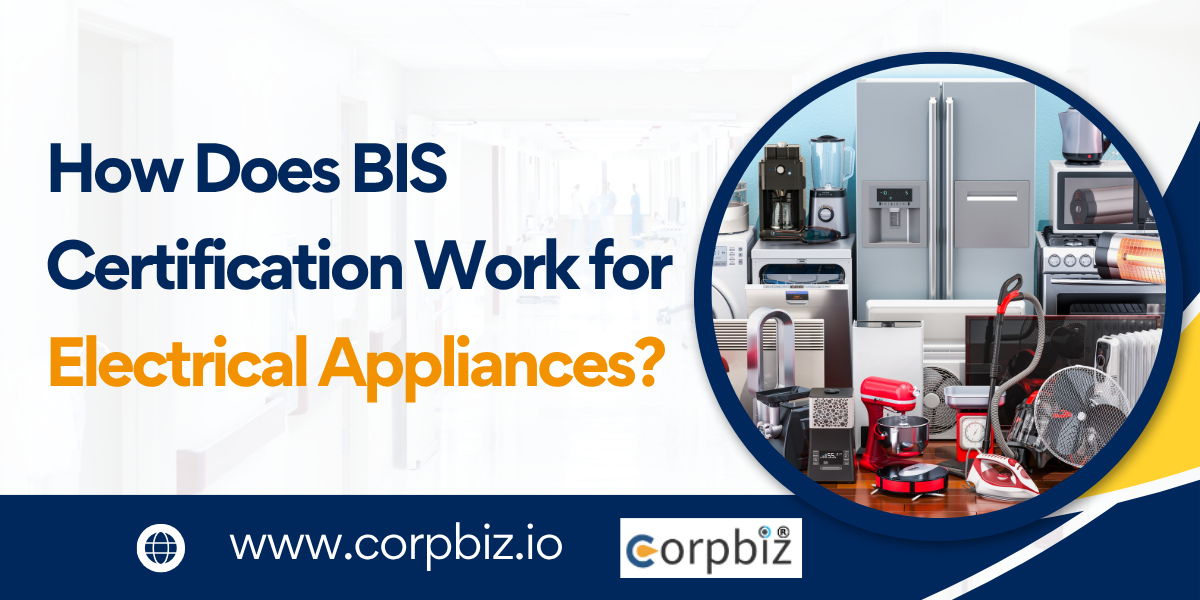
In India, electrical appliances are part of our daily lives. From electric kettles and mixers to LED TVs and mobile chargers, we use many products that run on electricity every day. But have you ever wondered how the government ensures these products are safe to use?
This is where BIS Certification becomes important.
The Bureau of Indian Standards (BIS) is the national standards body of India. It checks whether products meet safety, quality, and performance standards before they are sold in the market. For many electrical appliances, BIS approval is mandatory.
Today, businesses dealing with electronics, electrical appliances, and consumer goods must understand how BIS Certification Online works because non-compliance can lead to penalties, product seizures, and restrictions on sales in India.
In this blog, we will explain the complete BIS certification process for electrical appliances in simple words.
What is BIS Certification?
Bureau of Indian Standards certification is a quality assurance process that confirms a product follows Indian safety and quality standards.
When a product gets BIS approval, it receives permission to use the ISI mark or CRS marking depending on the product category.
The main objectives of BIS certification are:
- Consumer safety
- Product quality assurance
- Prevention of low-quality imports
- Standardization of products
- Building trust among buyers
For electrical appliances, BIS certification is often mandatory before manufacturing, importing, distributing, or selling products in India.
Why BIS Certification is Important for Electrical Appliances
Electrical products can become dangerous if they are poorly manufactured. Faulty appliances may cause:
- Electric shocks
- Fire accidents
- Short circuits
- Battery explosions
- Property damage
BIS certification helps reduce these risks by ensuring that products are tested under approved standards before entering the Indian market.
It also benefits manufacturers and importers by:
- Improving brand reputation
- Increasing customer trust
- Helping in legal compliance
- Supporting smooth imports
- Avoiding government penalties
Read more – https://techners.net/how-can-borrowers-benefit-from-nbfc-loans/
Types of BIS Certification for Electrical Appliances
There are mainly two common BIS schemes for electrical and electronic products.
1. ISI Certification
ISI certification applies mainly to products covered under mandatory Indian Standards.
Products certified under this scheme carry the famous ISI mark.
Examples include:
- Electric irons
- Water heaters
- Switches
- Cables
- Kitchen appliances
- Fans
The ISI mark shows that the product follows Indian safety standards.
Many manufacturers apply for ISI Certification Online to simplify documentation and approvals.
2. BIS CRS Registration
The Compulsory Registration Scheme (CRS) mainly covers electronics and IT products.
This scheme was introduced by the Ministry of Electronics and Information Technology (MeitY).
Products covered under CRS include:
- LED lights
- Mobile phones
- Power banks
- Laptops
- Smart watches
- LED TVs
- Chargers
- Adapters
Under this system, products must be tested in BIS-recognized labs before registration is granted.
Today, many businesses prefer applying through BIS CRS registration online because it reduces paperwork and speeds up the process.
Electrical Appliances Covered Under BIS Certification
India has expanded BIS requirements for household and commercial electrical appliances under recent Quality Control Orders (QCOs).
Common products covered include:
- Microwave ovens
- Vacuum cleaners
- Mixers and grinders
- Electric kettles
- Hair dryers
- Washing machines
- Electric cookers
- Dishwashers
- Massage devices
- Electric heating tools
- Coffee makers
- Water heaters
The government has made certification mandatory for many of these products to improve public safety.
Step-by-Step Process of BIS Certification for Electrical Appliances
Let us understand how the BIS certification process works.
Step 1: Identify the Applicable Standard
The first step is to determine whether the product falls under:
- ISI Certification Scheme
- CRS Registration Scheme
Each product category has a specific Indian Standard (IS code).
For example:
- IS 302 for household electrical appliances
- IS 13252 for IT equipment
- IS 2082 for water heaters
Choosing the correct standard is very important.
Step 2: Product Testing
The product must be tested in a BIS-recognized laboratory.
The lab checks several factors including:
- Electrical safety
- Performance
- Durability
- Energy efficiency
- Fire resistance
- Shock protection
If the product passes all tests, the lab issues a test report.
This report becomes one of the most important documents during the certification process.
Step 3: Documentation Submission
The applicant must submit documents to BIS.
Common documents include:
- Business registration certificate
- Factory license
- Trademark certificate
- Product specifications
- Test reports
- Authorization letter
- Manufacturing process details
For foreign manufacturers, additional documents may be required.
Step 4: Application Filing
The next step is submitting the BIS application online.
Nowadays, businesses prefer BIS Certification Online services because the process has become digital and more convenient.
The online system helps applicants:
- Track application status
- Upload documents
- Receive notices
- Make payments
- Manage renewals
Step 5: Factory Inspection
For certain certifications, BIS officials inspect the manufacturing unit.
The inspection verifies:
- Production process
- Quality control system
- Testing facilities
- Raw materials
- Product consistency
This step ensures that the factory can continuously produce safe products.
Step 6: Grant of Certification
Once all requirements are fulfilled, BIS grants certification.
The manufacturer can now:
- Use the ISI mark
- Use CRS marking
- Sell products legally in India
- Import regulated products
What is the ISI Mark?
The ISI mark is one of India’s most recognized quality symbols.
It shows that the product follows Indian Standards and has been approved by BIS.
Consumers often trust ISI-marked products more because they indicate:
- Better safety
- Better quality
- Reliable performance
For electrical appliances, the ISI mark is extremely important.
What is BIS CRS Registration?
CRS stands for Compulsory Registration Scheme.
Unlike traditional ISI certification, CRS mainly applies to electronics and IT goods.
Under CRS:
- Manufacturers self-declare compliance
- Products are tested in approved labs
- BIS grants registration after verification
The manufacturer then uses the Standard Mark with a registration number.
Today, BIS CRS registration Online has become the preferred method because it simplifies the entire approval process.
BIS Certification for Imported Electrical Appliances
Foreign manufacturers also need BIS approval before exporting regulated products to India.
In such cases:
- Products must meet Indian standards
- BIS-approved testing is mandatory
- An Authorized Indian Representative (AIR) may be required
Without certification, imported products may be stopped at customs.
This is why many international companies start the BIS process before entering the Indian market.
New Government Rules for Electrical Appliances
India has recently introduced stricter Quality Control Orders for electrical appliances.
The new regulations cover over 90 categories of appliances.
These rules aim to:
- Improve product safety
- Reduce unsafe imports
- Align with international standards
- Increase consumer protection
Products that do not comply may face:
- Penalties
- Product recalls
- Import restrictions
- Seizure of goods
Common Challenges in BIS Certification
Although the process is beneficial, businesses often face challenges such as:
1. Incorrect Documentation
Missing or incorrect documents can delay approval.
2. Failed Product Testing
Products may fail safety standards during lab testing.
3. Wrong Product Category
Choosing the wrong Indian Standard creates complications.
4. Delays in Factory Audits
Inspection scheduling sometimes takes time.
5. Frequent Regulatory Changes
Government rules may change regularly.
Because of these issues, many companies hire BIS consultants.
Role of BIS Consultants
Professional consultants help businesses manage the certification process smoothly.
They assist with:
- Product classification
- Documentation
- Lab coordination
- Application filing
- Audit preparation
- Renewal support
This reduces errors and speeds up approval.
BIS Certification for Toys
Many people think BIS only applies to electronics, but toys also require certification.
The government introduced strict safety standards for toys to protect children from harmful materials and unsafe products.
Under BIS Certification for Toys, products must undergo testing for:
- Mechanical safety
- Chemical safety
- Flammability
- Toxic materials
Both Indian and foreign toy manufacturers must comply with these rules before selling toys in India.
This has improved the quality of toys available in the market.
Benefits of BIS Certification for Businesses
BIS certification offers many advantages.
Legal Compliance
Businesses can legally sell products in India.
Better Customer Trust
Consumers trust certified products more.
Increased Sales
Quality-certified products attract more buyers.
Easier Imports
Customs clearance becomes smoother.
Competitive Advantage
Certified products stand out in the market.
Reduced Risk
Safety testing lowers product liability risks.
How Long Does BIS Certification Take?
The timeline depends on:
- Product category
- Type of certification
- Lab testing duration
- Document accuracy
- Factory inspection
Usually, the process may take a few weeks to several months.
Hiring experts often reduces delays.
Validity of BIS Certification
BIS certification is generally valid for a fixed period.
Manufacturers must:
- Renew certificates on time
- Maintain product quality
- Follow updated standards
- Cooperate during surveillance audits
Failure to comply may lead to cancellation.
Penalties for Non-Compliance
Selling regulated electrical appliances without BIS approval can lead to:
- Heavy fines
- Product seizure
- Legal action
- Import bans
- Business losses
Therefore, businesses should complete certification before launching products.
Future of BIS Certification in India
India is continuously expanding quality regulations.
More products are now coming under:
- CRS registration
- ISI certification
- QCO compliance
The government is focusing on:
- Consumer safety
- High-quality manufacturing
- Reduction of substandard imports
- International standard alignment
As India’s electronics market grows, BIS certification will become even more important.
Conclusion
BIS certification plays a major role in ensuring that electrical appliances sold in India are safe and reliable. Whether it is a household appliance, electronic gadget, or imported product, compliance with BIS standards is essential.
The process includes product testing, documentation, factory inspections, and regulatory approvals. Although the process may seem technical, it helps manufacturers build trust and operate legally in the Indian market.
Today, businesses increasingly prefer BIS Certification Online, BIS CRS registration Online, and ISI Certification Online services because they simplify the compliance process and reduce delays.
With stricter government regulations and rising consumer awareness, BIS certification is no longer just an option — it has become a business necessity.
Frequently Asked Questions (FAQs)
1. What is BIS certification for electrical appliances?
BIS certification confirms that electrical appliances meet Indian safety and quality standards before they are sold in India.
2. Is BIS certification mandatory for electrical appliances?
Yes, many electrical appliances require mandatory BIS certification under government Quality Control Orders.
3. What is the difference between ISI certification and CRS registration?
ISI certification mainly applies to industrial and household products, while CRS registration mainly covers electronics and IT products.
4. Can foreign manufacturers apply for BIS certification?
Yes, foreign manufacturers can apply, but they may need an Authorized Indian Representative (AIR).
5. How can I apply for BIS Certification Online?
Applications can be submitted through the BIS online portal along with required documents and test reports.
6. What is BIS CRS registration Online?
It is the digital application process for registering electronic and IT products under the Compulsory Registration Scheme.
7. What happens if a product fails BIS testing?
The manufacturer must correct the issues and submit the product again for testing.
8. Is BIS Certification for Toys mandatory?
Yes, toy manufacturers and importers must obtain BIS certification before selling toys in India.
9. How long does BIS certification take?
The process may take a few weeks to several months depending on product type and documentation.
10. Why is the ISI mark important?
The ISI mark assures consumers that the product meets Indian safety and quality standards.
About Corpbiz
Corpbiz is a leading business compliance and legal consultancy platform in India. The company helps startups, manufacturers, importers, and enterprises with regulatory approvals, licenses, and certifications including BIS Certification, CDSCO Registration, Legal Metrology, Company Registration, and more.
Corpbiz offers end-to-end support for businesses looking to obtain BIS Certification Online, BIS CRS registration Online, and ISI Certification Online with expert guidance and simplified compliance solutions.
Author Profile
Author: Corpbiz Expert Team
The Corpbiz Expert Team consists of experienced legal, technical, and compliance professionals specializing in Indian regulatory approvals and business licensing. The team regularly publishes informative content on BIS certification, CDSCO approvals, trademark registration, startup compliance, taxation, and import-export regulations to help businesses stay legally compliant and growth-ready.
About The Author