High Strength PVDF Pipe for Industrial Pipeline Networks
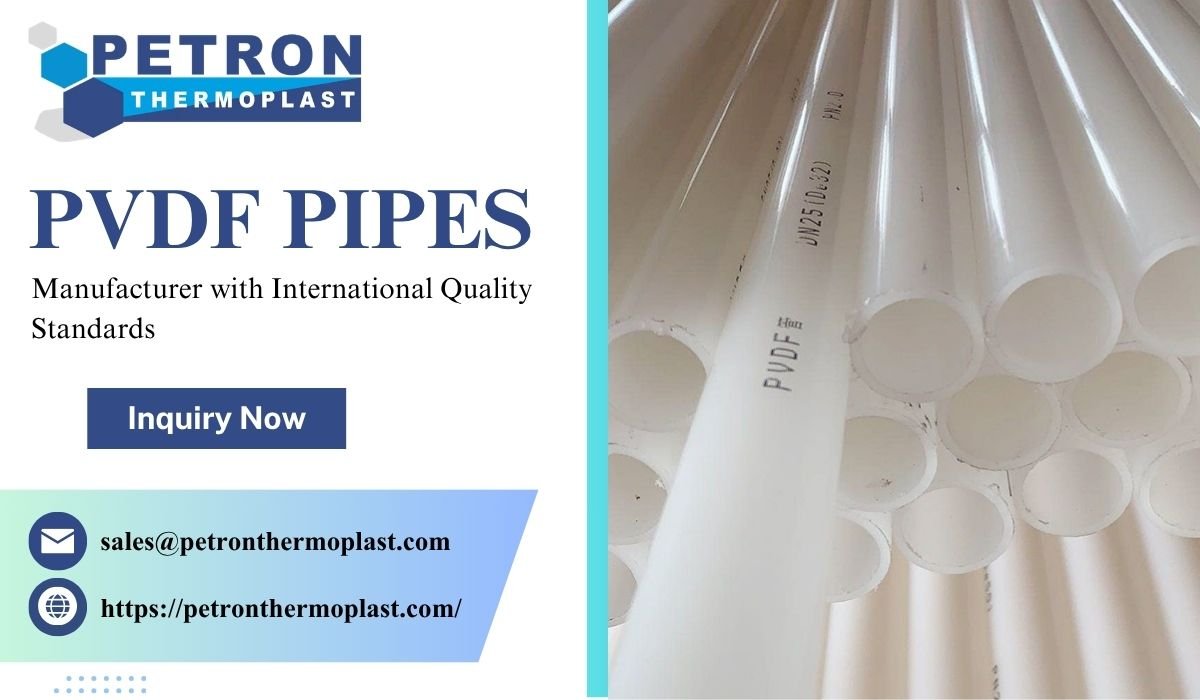
PVDF Pipe
Polyvinylidene Fluoride (PVDF) pipes are widely recognized in industrial engineering for their exceptional mechanical strength, chemical resistance, and thermal stability. In demanding pipeline networks where performance, durability, and safety are critical, high strength PVDF pipes provide a reliable and long-lasting solution. These pipes are extensively used in industries such as chemical processing, pharmaceuticals, water treatment, and semiconductor manufacturing, where conventional materials may fail under aggressive operating conditions.
Overview of PVDF Material
PVDF is a high-performance fluoropolymer known for its superior resistance to harsh chemicals, high temperatures, and mechanical stress. Its molecular structure provides a unique combination of strength and flexibility, making it ideal for industrial piping systems.
Key Material Properties
- Density: ~1.78 g/cm³
- Tensile Strength: 40 – 55 MPa
- Operating Temperature Range: -40°C to +140°C
- Excellent resistance to acids, alkalis, and solvents
- Low permeability and high purity
- High UV and weather resistance
These properties enable PVDF pipes to maintain structural integrity and performance in extreme industrial environments.
Importance of High Strength in Pipeline Networks
Industrial pipeline systems are subjected to various stresses, including:
- Internal pressure fluctuations
- Temperature variations
- Chemical exposure
- Mechanical loads and vibrations
High strength PVDF pipes are engineered to withstand these conditions without deformation, cracking, or failure. This ensures consistent fluid transport and system reliability.
Key Features of High Strength PVDF Pipes
Superior Mechanical Strength
PVDF pipes offer high tensile and impact strength, enabling them to handle:
- High pressure applications
- Mechanical stress and external loads
- Long pipeline spans without support failure
Excellent Chemical Resistance
PVDF is highly resistant to:
- Strong acids (sulfuric, nitric, hydrochloric)
- Alkalis and salts
- Organic solvents and oxidizing agents
This makes PVDF pipes suitable for aggressive chemical environments.
Thermal Stability
- Operates effectively at temperatures up to 140°C
- Maintains mechanical properties under thermal stress
- Suitable for high-temperature fluid transport
Smooth Internal Surface
- Reduces friction losses
- Prevents scaling and deposits
- Ensures efficient flow rates
UV and Weather Resistance
- Suitable for outdoor installations
- Resistant to degradation from sunlight and environmental exposure
Types of PVDF Pipes
Standard PVDF Pipes
- Used for general industrial applications
- Available in various sizes and pressure ratings
High Purity PVDF Pipes
- Designed for semiconductor and pharmaceutical industries
- Ensures contamination-free fluid transport
Reinforced PVDF Pipes
- Enhanced strength for high-pressure systems
- Suitable for critical industrial applications
Technical Specifications
Typical specifications for industrial PVDF pipes include:
- Size Range: ½” to 12” (or customized)
- Pressure Rating: PN10 to PN25
- Temperature Range: -40°C to +140°C
- Standards: ASTM, DIN, ISO
- Joining Methods: Socket fusion, butt fusion, electrofusion, flanged
These specifications ensure compatibility with a wide range of industrial systems.
Applications in Industrial Pipeline Networks
Chemical Processing Industry
PVDF pipes are used for transporting corrosive chemicals, ensuring safety and reliability.
Water and Wastewater Treatment
Suitable for handling treated water, chemicals, and effluents.
Pharmaceutical Industry
High purity PVDF pipes are used for contamination-free fluid handling.
Semiconductor Industry
Used in ultra-pure water systems and chemical delivery lines.
Oil and Gas Industry
Applicable in chemical injection and fluid handling systems.
Power Plants
Used in cooling systems and chemical dosing applications.
Advantages Over Conventional Materials
| Parameter | PVDF Pipe | Metal Pipe |
| Corrosion Resistance | Excellent | Requires coating |
| Weight | Lightweight | Heavy |
| Maintenance | Low | High |
| Chemical Compatibility | High | Limited |
| Service Life | Long | Moderate |
Installation Methods
Fusion Welding
- Creates strong, leak-proof joints
- Ensures uniform material properties
Flanged Connections
- Suitable for large diameter systems
- Easy assembly and disassembly
Threaded Connections
- Used for smaller pipelines
- Quick installation
Installation Benefits
- Lightweight material reduces handling effort
- Easy joining techniques
- Reduced installation time and cost
- Leak-proof connections
Maintenance and Lifecycle Performance
Maintenance Advantages
- No corrosion or scaling
- Minimal inspection requirements
- Long intervals between maintenance
Lifecycle Benefits
- Long service life
- Reduced downtime
- Lower total cost of ownership
Quality Control and Standards
High-quality PVDF pipes are manufactured under strict quality control processes.
Testing Procedures
- Hydrostatic pressure testing
- Chemical resistance testing
- Dimensional accuracy checks
- Thermal performance testing
Standards Compliance
- ISO standards for piping systems
- ASTM specifications for PVDF materials
- DIN standards for industrial applications
Customization Options
Manufacturers provide customization to meet specific project requirements:
- Custom sizes and wall thickness
- Specialized pressure ratings
- Integration with fittings and valves
- Custom fabrication for complex systems
Sustainability Benefits
- Long lifecycle reduces material waste
- Recyclable thermoplastic material
- Energy-efficient manufacturing
- Reduced need for protective coatings
Role in Advanced Industrial Systems
PVDF pipes are increasingly used in modern automated systems:
- Compatible with advanced process control systems
- Supports high-purity and high-precision applications
- Reliable performance in continuous operations
Conclusion
High strength PVDF pipes provide a robust and reliable solution for industrial pipeline networks operating under demanding conditions. Their superior mechanical strength, chemical resistance, and thermal stability make them ideal for industries requiring high-performance piping systems.
With easy installation, low maintenance requirements, and long service life, PVDF pipes offer significant operational and economic advantages over conventional materials. Their adaptability to various industrial applications and compliance with international standards make them a preferred choice for modern engineering systems.
About The Author