Why Shipping Container Cafe Concepts Are Booming in 2026
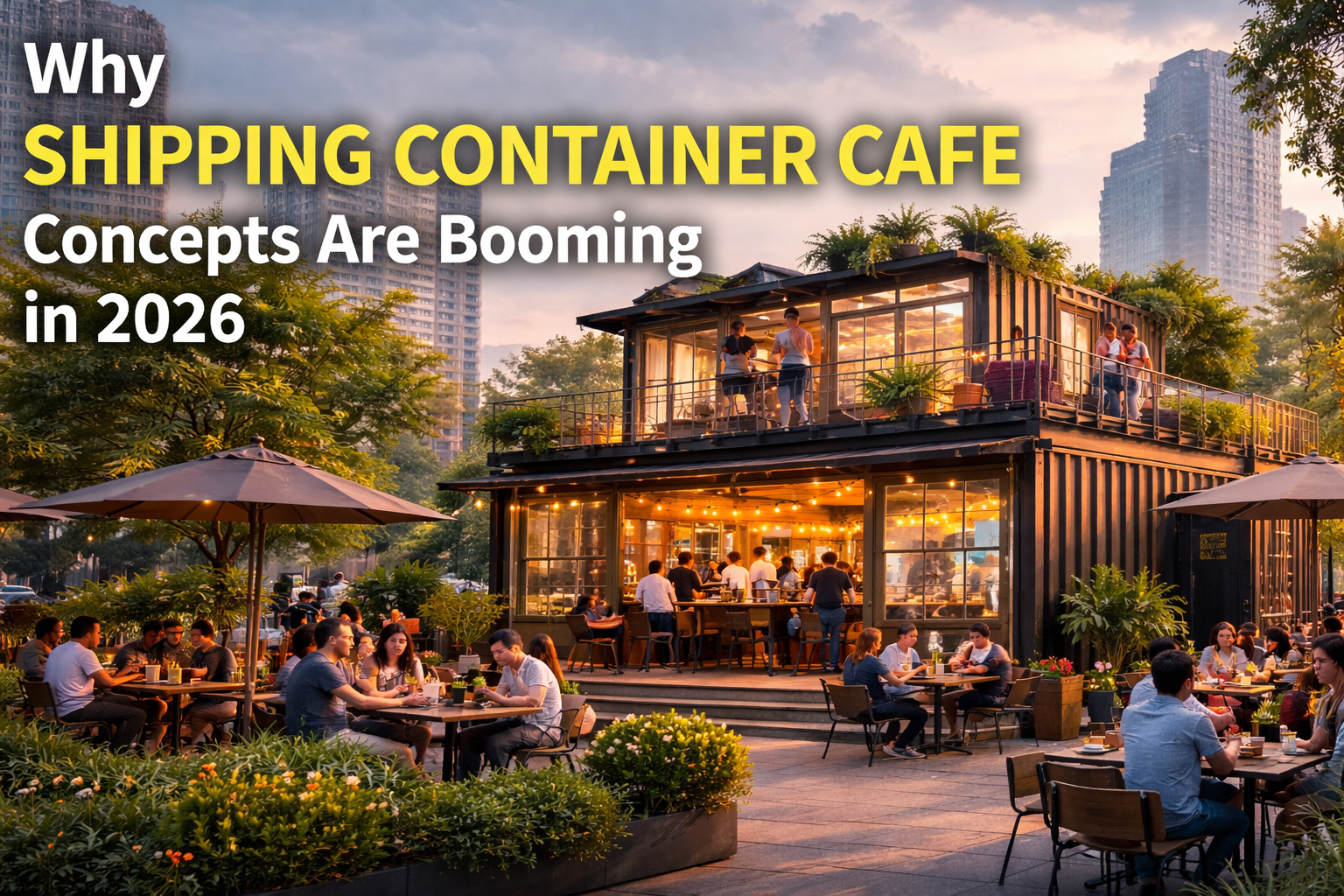
The global café culture is evolving rapidly, driven by changing consumer lifestyles, urban space constraints, and a growing demand for sustainable business models. In this landscape, the Shipping Container Cafe has emerged as one of the most compelling concepts of 2026. Once viewed as a niche experiment, container cafés are now becoming mainstream across urban centers, tourist destinations, and emerging commercial zones.
This surge in popularity is not accidental. It is the result of economic efficiency, design flexibility, faster deployment timelines, and an increasing emphasis on eco-conscious construction practices. As cities grow denser and consumers seek unique experiences, container cafés offer a smart balance between creativity and practicality.
This article explores the key reasons behind the rapid growth of shipping container café concepts in 2026, examining design trends, sustainability factors, regional adaptations, and why markets such as the Middle East—supported by advanced Container Modification in UAE practices—are playing a significant role in this global shift.
The Evolution of Café Spaces in Modern Cities
Traditional brick-and-mortar cafés have long dominated the food and beverage sector. However, rising real estate costs, lengthy construction timelines, and strict zoning regulations have made it increasingly difficult for new café ventures to launch efficiently. As a result, entrepreneurs and developers began searching for alternatives that offer mobility, affordability, and design freedom.
Shipping containers, originally designed for global cargo transport, provided an unexpected yet effective solution. Their standardized dimensions, durable steel structure, and modular nature made them ideal for conversion into commercial spaces. Over time, creative adaptations transformed these steel boxes into fully functional cafés that rival conventional establishments in comfort and aesthetics.
By 2026, this concept has matured into a recognized architectural and business trend rather than a temporary novelty.
Cost Efficiency Driving Adoption
One of the strongest reasons behind the rise of the Shipping Container Cafe is cost efficiency. Compared to traditional construction, container-based cafés require significantly lower initial investment. The structural shell already exists, reducing material costs and construction labor.
Additional savings come from shorter build timelines. Since container modifications can occur off-site, weather delays and on-site disruptions are minimized. This allows café operators to begin operations faster, improving return on investment and reducing financial risk.
For startups and small business owners, this lower barrier to entry has made container cafés an attractive alternative to conventional café models.
Faster Setup and Scalability
Speed has become a defining factor in modern business success. In 2026, the ability to launch quickly and adapt to market demand is essential. Shipping container cafés excel in this area.
Once design plans are finalized, container units can be modified, fitted, and transported to the site within weeks rather than months. This rapid deployment is particularly beneficial for seasonal locations, pop-up cafés, and pilot projects.
Scalability is another major advantage. Café operators can start with a single container and expand later by adding more units. This modular approach allows businesses to grow organically without committing to large-scale construction upfront.
Design Flexibility and Visual Appeal
Modern consumers value experiences as much as products. A café is no longer just a place to drink coffee—it is a social space, a visual attraction, and often a social media hotspot. Shipping container cafés meet this demand through distinctive design possibilities.
Containers can be stacked, extended, or combined in creative layouts. Large glass openings, rooftop seating, outdoor decks, and minimalist interiors can all be incorporated without compromising structural integrity. This flexibility enables café designers to create visually striking spaces that stand out in crowded urban environments.
In 2026, design innovation has become a key differentiator, and container cafés provide a strong platform for architectural creativity.
Sustainability and Eco-Conscious Construction
Sustainability is no longer optional. Consumers increasingly support businesses that demonstrate environmental responsibility, and shipping container cafés align well with this expectation.
Reusing shipping containers reduces the need for new construction materials, lowering overall environmental impact. Many container cafés also integrate energy-efficient lighting, solar panels, natural ventilation, and water-saving systems.
The compact nature of container spaces encourages efficient resource usage, while their adaptability allows cafés to be relocated rather than demolished. This approach supports a circular economy and reduces long-term waste.
As sustainability standards tighten globally, container cafés are well positioned to meet future environmental regulations.
The Role of Container Modification in the UAE Market
The Middle East has become a significant contributor to the global container café trend, particularly due to advanced Container Modification UAE capabilities. The region’s expertise in adapting containers to extreme climates has set new benchmarks in durability and comfort.
Container modifications in the UAE often include high-performance insulation, climate control systems, and materials suited for heat resistance. These innovations have proven that container cafés can function efficiently even in challenging environmental conditions.
This expertise has influenced global best practices, demonstrating that shipping container cafés are not limited to mild climates. As a result, the concept has gained credibility across diverse regions worldwide.
Urban Space Optimization
Cities in 2026 face increasing pressure on available land. Vacant lots, narrow plots, and temporary spaces often remain unused due to impracticality for traditional construction. Shipping container cafés offer an effective solution for activating these underutilized spaces.
Their compact footprint allows placement in locations that would otherwise be unsuitable for cafés, such as parking lots, waterfronts, transit hubs, and rooftop areas. This flexibility supports urban revitalization while providing convenient access to food and beverage services.
Municipal planners and developers increasingly view container cafés as tools for activating public spaces without permanent structural commitments.
Mobility and Relocation Benefits
Unlike fixed buildings, shipping container cafés can be relocated if business needs change. This mobility reduces long-term risk and offers flexibility rarely found in traditional hospitality models.
If foot traffic declines in one area, the café can be moved to a more profitable location. This is particularly valuable for event-based operations, tourist zones, and seasonal markets.
In 2026, this adaptability aligns well with unpredictable market conditions and evolving consumer behavior, making container cafés a resilient business model.
Compliance and Regulatory Advantages
Regulatory compliance often poses challenges for new café projects. Shipping container cafés, however, can simplify this process in many regions.
Because containers are prefabricated units, they often fall under modular or temporary structure regulations. This can result in faster approvals, especially when the café is not intended as a permanent installation.
While regulations vary by location, many authorities have begun updating policies to accommodate container-based structures, recognizing their economic and environmental benefits.
Appeal to Experience-Driven Consumers
Modern café patrons seek more than just beverages. They value ambiance, originality, and authenticity. Shipping container cafés naturally cater to these preferences by offering unique environments that differ from standardized café chains.
The industrial aesthetic, combined with creative interior design, appeals strongly to younger demographics and urban professionals. Outdoor seating and open layouts further enhance the social experience.
In 2026, experience-driven consumption continues to shape the hospitality industry, and container cafés align seamlessly with this trend.
Technological Integration
Technology plays an increasingly important role in café operations. Shipping container cafés are well suited for integrating smart systems due to their compact and efficient layouts.
Digital ordering kiosks, energy monitoring systems, and automated lighting controls can be installed with relative ease. These features improve operational efficiency while enhancing customer convenience.
As smart infrastructure becomes more accessible, container cafés are leveraging technology to compete effectively with traditional establishments.
Supporting Local Entrepreneurship
The affordability and flexibility of shipping container cafés have opened doors for independent entrepreneurs who may not have access to large capital investments. This has encouraged diversity within the café sector and supported local economies.
In many regions, container cafés serve as entry points for aspiring business owners, food innovators, and creative professionals. This democratization of café ownership has contributed significantly to the concept’s popularity in 2026.
Adaptability to Different Concepts
While coffee remains the primary focus, shipping container cafés are not limited to one format. They can accommodate a wide range of concepts, including specialty beverages, desserts, light meals, and cultural themes.
This adaptability allows café operators to test new ideas without major financial risk. If a concept proves successful, it can be expanded or replicated in other locations using additional container units.
Such flexibility supports innovation and experimentation within the food and beverage industry.
Global Influence and Cultural Acceptance
As shipping container cafés gain visibility worldwide, cultural acceptance has grown. What was once considered unconventional is now recognized as a practical and stylish solution.
Global exposure through travel, media, and digital platforms has helped normalize the concept. In 2026, container cafés are no longer viewed as temporary or inferior but as legitimate, high-quality hospitality spaces.
This shift in perception has played a crucial role in their widespread adoption.
Future Outlook for Shipping Container Cafés
The momentum behind shipping container café concepts shows no signs of slowing. As urban challenges intensify and sustainability becomes more critical, container-based solutions offer a forward-thinking alternative.
Advancements in design, insulation, and modular engineering will continue to enhance functionality and comfort. Markets with strong modification expertise, such as those leveraging Container Modification UAE practices, are likely to influence future innovations.
In the coming years, shipping container cafés are expected to evolve further, integrating smart technology, renewable energy, and advanced materials.
Conclusion
The rapid rise of the Shipping Container Cafe in 2026 is the result of multiple converging factors—economic efficiency, design flexibility, sustainability, and adaptability to modern lifestyles. Supported by global innovation and regional expertise in container modification, these cafés represent a practical response to contemporary urban and commercial challenges.
As consumer expectations continue to evolve, shipping container cafés offer a compelling blend of functionality and experience. Their growth reflects not just a design trend, but a broader shift toward smarter, more sustainable ways of creating social and commercial spaces.
About The Author